



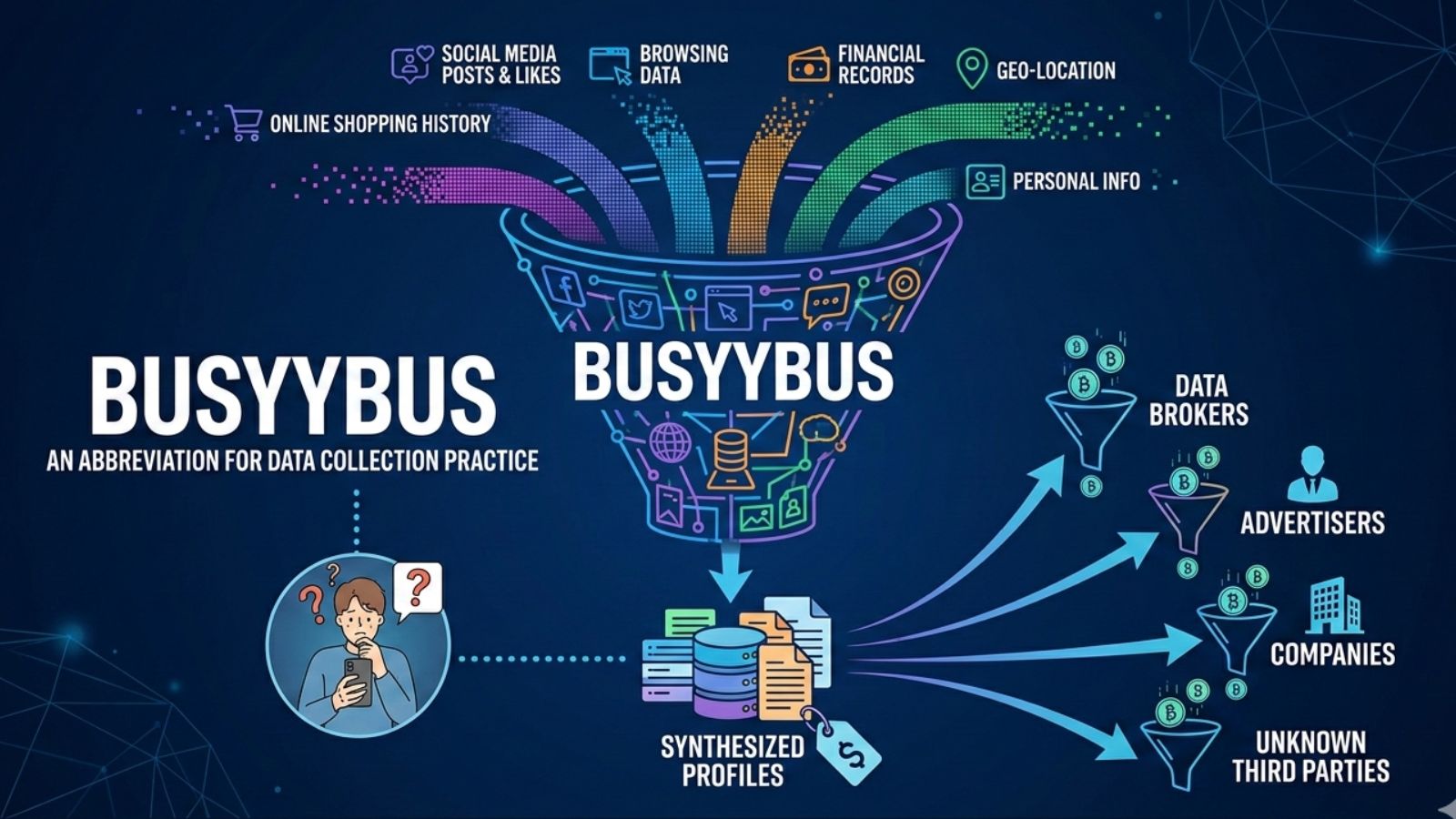
Have you ever searched your own name online and been shocked by how much personal information appears? That unsettling experience is exactly what the concept of busyybus is all about. Whether you stumbled upon this term while researching digital privacy, data collection, or your online footprint, you are in the right place. This comprehensive guide will explain what busyybus means, why it matters in today’s data-driven world, and — most importantly — what you can do to protect yourself. By the end of this article, you will have a clear, actionable roadmap to take control of your personal information online.
What Does Busyybus Actually Mean? A Clear and Simple Explanation
The term busyybus is not the name of a specific website, app, or company you need to sign up for. Rather, it is a concept — a shorthand way of describing the modern reality of personal data collection and aggregation. Think of it as the invisible system that gathers your digital breadcrumbs from across the internet and assembles them into a detailed profile about you.
In practical terms, busyybus refers to the process by which data brokers, third-party tracking companies, and advertising networks collect your personal information — your name, address, phone number, shopping habits, browsing behavior, and even your social connections — and combine them into a single, comprehensive profile. This profile is then sold, shared, or used to target you with advertising, background checks, or people-search results. Understanding this concept is the essential first step toward reclaiming your digital privacy.
The Origin and Growing Relevance of the Busyybus Concept
The idea behind busyybus has been building for decades, but it has become increasingly significant in the age of smartphones, social media, and big data. In the early days of the internet, data collection was limited and mostly anonymous. Today, every click, search, purchase, and app download generates data points that can be linked back to your identity.
According to industry reports, the global data broker market is worth billions of dollars and continues to grow each year. Companies in this space profit by knowing more about you than you might know about yourself. The busyybus concept emerged as a way to help ordinary people understand and talk about this invisible industry that operates largely in the background of daily digital life.
How Busyybus Relates to Your Digital Footprint
Your digital footprint is the sum total of everything you leave behind when you use the internet. Busyybus is the process that collects, organizes, and exploits that footprint. There are two main types of digital footprints that feed the busyybus system:
- Active Footprint: This is the data you consciously create — social media posts, blog comments, online reviews, profile information on apps, and anything you willingly publish or submit on the internet.
- Passive Footprint: This is the data collected about you without your active involvement — your IP address, browsing history tracked by cookies, the time you spend on web pages, your device information, and your geographic location detected through GPS or network signals.
Together, these two layers of your digital footprint create the raw material for the busyybus data aggregation process. The more you use the internet, the richer and more detailed this footprint becomes — and the more valuable it is to those who collect it.
The Role of Data Brokers in the Busyybus System
Data brokers are the engine behind the busyybus concept. These are companies whose entire business model revolves around collecting personal information about individuals, packaging it into profiles, and selling that data to third parties. You have almost certainly never signed a contract with a data broker, yet they likely know your name, current and past addresses, phone numbers, estimated income range, and much more.
Some of the most well-known data brokers include companies that operate people-search websites. If you have ever searched your name on a site and found a profile listing your age, relatives, and address history, you have seen the busyybus data system in action. These profiles are built automatically using software that continuously scans and indexes publicly available data sources.
Where Does Your Personal Data Actually Come From?
To understand busyybus fully, you need to know the variety of sources that feed the data collection machine. These sources are broader than most people realize:
- Government and Public Records: Birth certificates, property deeds, marriage and divorce records, voter registrations, and court documents are legally public and freely accessible.
- Social Media Platforms: Even with privacy settings enabled, the data you share on Facebook, Instagram, LinkedIn, and X (Twitter) is analyzed and used for targeted advertising.
- Online Shopping and Loyalty Programs: Your purchase history, wish lists, and loyalty card data build a detailed picture of your spending habits and preferences.
- Browser Cookies and Tracking Pixels: Websites place small files on your device that track which pages you visit, how long you stay, and what you click on.
- App Permissions: Mobile apps often request access to your location, contacts, microphone, and camera — data that can be shared with advertising networks.
Public Records vs. Private Data: Understanding the Difference
One of the most important distinctions to understand in the context of busyybus is the difference between public records and private personal data. Both types contribute to the data profiles that are compiled about you, but they come with very different levels of control on your part.
| Aspect | Public Records | Private Personal Data |
| Source | Government agencies | Your personal online activity |
| Access | Legally available to anyone | Controlled by you and platform policies |
| Your Control | Very limited — requires legal action | High — managed by privacy settings |
Who Is Most at Risk from Busyybus-Style Data Collection?
While the busyybus data collection system affects virtually everyone who uses the internet, certain groups of people face greater risks and more severe consequences when their data is aggregated and exposed:
- Job Seekers and Professionals: Employers increasingly search candidates online. Outdated, inaccurate, or embarrassing information in data profiles can cost you a job opportunity before you even get an interview.
- Domestic Abuse Survivors: People who have fled dangerous situations can be put at serious risk if their current address appears on people-search websites.
- Public Figures and Executives: Anyone with a public profile is a prime target for harassment, identity theft, or targeted scams using aggregated personal data.
- Teenagers and Young Adults: Young people who grew up sharing everything online may have extensive data profiles built up over years, often without realizing the long-term implications.
Real-World Consequences of the Busyybus Data Problem
The busyybus data collection system is not merely a theoretical privacy concern — it has real, tangible consequences for millions of people every day. Understanding these risks is crucial for motivating action to protect yourself:
- Identity Theft: With enough aggregated personal information, cybercriminals can open credit accounts, take out loans, or file false tax returns in your name. Identity theft affects millions of people annually and can take years to fully resolve.
- Targeted Scams and Phishing: Scammers who know your name, address, employer, and family members can craft highly convincing phishing emails or phone calls that are far more believable than generic spam.
- Discrimination and Profiling: Data profiles can be used to discriminate in housing, insurance pricing, or lending, often without your knowledge or consent.
- Reputational Damage: Outdated or incorrect information in data profiles — old addresses, mistaken criminal records, or irrelevant associations — can seriously damage your personal and professional reputation.
How to Check What Information Is Already Out There About You
Before you can protect yourself from the busyybus data collection system, you need to understand what information is already publicly available about you. Here is a practical starting process:
- Google Yourself Thoroughly: Search your full name, your name plus city, your name plus phone number, and your name plus email address. Review the first three pages of results carefully.
- Check People-Search Sites: Visit the most common people-search platforms and search for your name. Note what information appears, including old addresses, relatives listed, and any associated phone numbers.
- Review Your Social Media Profiles as a Stranger: Log out of your accounts and search for your profiles to see exactly what a stranger or employer would find.
- Check Data Breach Databases: Use reputable online tools to check whether your email address has appeared in any known data breaches.
Step-by-Step Guide to Removing Your Data from Broker Sites
Removing your information from data broker sites is the most direct way to fight back against the busyybus system. While it requires some effort, the process is straightforward once you understand how it works:
- Create a Dedicated Email Address: Use a new email address specifically for opt-out requests. This keeps your primary inbox clean and allows you to track responses easily.
- Search for Data Broker Opt-Out Lists: Search online for comprehensive lists of data broker opt-out pages. These lists are regularly updated by privacy advocates and will save you significant research time.
- Submit Opt-Out Requests: Visit each data broker site, locate their Privacy or Opt-Out page, and follow their specific removal instructions. Most will require email confirmation.
- Document Everything: Keep a spreadsheet tracking which sites you have submitted opt-out requests to and the date of submission.
- Repeat Every 3-6 Months: Data brokers regularly re-add information as they update their databases. Treat this as an ongoing maintenance task rather than a one-time fix.
How to Protect Your Privacy from Future Busyybus Data Collection
Removing existing data is only half the battle. You also need to reduce the amount of new data you are generating and sharing going forward. These privacy protection strategies will significantly limit your exposure to the busyybus system:
- Use a VPN (Virtual Private Network): A VPN masks your IP address and encrypts your internet traffic, making it much harder for tracking companies to link your browsing activity to your identity.
- Enable Two-Factor Authentication (2FA): Adding a second verification step to your accounts dramatically reduces the risk of unauthorized access even if your password is compromised.
- Use a Password Manager: Strong, unique passwords for every account prevent data from one breached service from being used to access your other accounts.
- Review App Permissions Regularly: Go through the settings on your smartphone and revoke location, contact, and microphone access for any apps that do not genuinely need it.
- Use Privacy-Focused Browsers and Search Engines: Browsers that block trackers by default and search engines that do not log your queries significantly reduce your passive digital footprint.
Busyybus and Social Media: What Happens Behind the Scenes
Social media platforms are among the most significant contributors to the busyybus data ecosystem. Even when you use privacy settings, these platforms collect far more data than most users realize. Here is what is happening behind the scenes when you scroll, like, and share:
Platforms analyze not just what you post, but what you pause on while scrolling, how long you watch videos, which ads you hover over, and even content you start to type but then delete. This behavioral data is extraordinarily valuable for building psychological and demographic profiles used for targeted advertising and, in some cases, sold to third parties through advertising exchanges — a core component of how the busyybus data economy operates.
To minimize your exposure, regularly audit which third-party apps have access to your social media accounts, limit the personal details in your public profile, and be cautious about participating in viral quizzes or games — these are often data collection tools in disguise.
Your Legal Rights Against Busyybus-Type Data Collection
Depending on where you live, you may have significant legal rights that can help you combat the busyybus data collection system. Understanding these rights is empowering:
- GDPR (General Data Protection Regulation): If you are in the European Union or the UK, GDPR gives you the right to access any data a company holds about you, request its deletion (the ‘Right to be Forgotten’), and object to its processing.
- CCPA (California Consumer Privacy Act): California residents have the right to know what personal data is collected about them, opt out of the sale of their data, and request deletion of their information.
- Other State and National Laws: Many US states have introduced or passed their own privacy legislation modeled after CCPA. Various countries have their own data protection frameworks as well.
Common Myths and Misconceptions About Busyybus
There are several widespread misunderstandings about data collection and the busyybus concept that prevent people from taking effective action to protect their privacy:
- Myth: “I have nothing to hide, so I have nothing to worry about.” Privacy is not about hiding wrongdoing — it is about maintaining control over your personal narrative, protecting yourself from fraud, and preserving your right to be left alone.
- Myth: “Using incognito mode makes me invisible online.” Incognito mode only prevents your browser from saving your history locally. Your internet service provider, employer network, and the websites you visit can still track your activity.
- Myth: “My data is protected because I agreed to the privacy policy.” Most privacy policies are written to maximize data collection while maintaining technical legal compliance. Agreeing to them rarely means your data is protected in a meaningful way.
- Myth: “Deleting an app removes all my data.” Deleting an app from your device does not automatically delete the data the app has already collected and transmitted to its servers or sold to third parties.
Building Long-Term Habits to Stay Protected from Busyybus Data Practices
Protecting your privacy from the busyybus data collection system is not a one-time project — it is an ongoing lifestyle commitment. The most effective approach is to build consistent habits that naturally limit your data exposure over time:
- Conduct a personal privacy audit every six months. Review what apps you are using, what permissions they have, and which accounts you can close or minimize.
- Practice the principle of minimal disclosure. Before filling out any online form, ask yourself whether the information being requested is truly necessary for the service you are receiving.
- Stay informed about data breaches. Sign up for notifications that alert you when your email or accounts appear in known data breaches so you can respond quickly.
- Educate the people around you. Share what you learn about busyybus-style data collection with family members, especially older relatives and teenagers who may be particularly vulnerable.
Conclusion: Taking Control of Your Digital Life in the Age of Busyybus
The busyybus concept represents one of the most significant but least understood challenges of modern digital life. Your personal information is being collected, aggregated, and traded on a massive scale — often without your knowledge or meaningful consent. But understanding this reality is not cause for despair. It is cause for action.
By understanding where your data comes from, who collects it, and how it is used, you gain the knowledge needed to fight back. By auditing your digital footprint, opting out of data broker sites, strengthening your account security, and building better digital habits, you can dramatically reduce your exposure to the risks that the busyybus data economy creates.
Privacy in the digital age is not about disappearing from the internet entirely. It is about being thoughtful, intentional, and proactive about the information you share and the traces you leave behind. Start today — your digital future self will thank you.
FAQs About Busyybus
Q1: Is busyybus a specific website or company?
No. Busyybus is not a specific website or company. It is a concept used to describe the broader system of personal data collection, aggregation, and trading that operates across the internet. If you encountered the term while researching your online privacy, it was being used to explain how your personal data travels around the web and gets compiled into profiles.
Q2: Can I completely remove myself from the busyybus data system?
Complete removal is extremely difficult because some data, such as public government records, cannot be fully suppressed. However, you can significantly reduce your data profile by opting out of data broker sites, adjusting your privacy settings across platforms, and adopting better data hygiene habits going forward. The goal is to minimize your exposure rather than achieve absolute invisibility.
Q3: How often do data brokers update their information about me?
Data brokers update their databases regularly, often on a monthly or quarterly basis, as they continuously scan new public records and data sources. This is why opt-out requests need to be repeated periodically — typically every three to six months — rather than treated as a permanent solution.
Q4: Does using a VPN fully protect me from busyybus-type data collection?
A VPN is an important tool but not a complete solution on its own. It protects your network traffic and hides your IP address, which prevents some forms of tracking. However, if you are logged into accounts on websites, those sites can still track your behavior. A VPN works best as part of a broader privacy strategy that also includes limiting what you share online and regularly opting out of data broker databases.
Q5: Is the information on people-search sites always accurate?
No, and this is a significant problem. People-search sites compile data automatically and often contain errors, outdated information, or data that has been incorrectly linked to the wrong person. If you find inaccurate information about yourself on these sites, you can contact them directly through their opt-out or correction process to request updates or removal.
Q6: What is the single most important step I can take right now to protect my privacy?
If you can only do one thing today, Google your own name thoroughly. Seeing exactly what information is publicly available about you is the most eye-opening and motivating first step toward taking your privacy seriously. Once you know what is out there, you can prioritize which steps to take first in cleaning up your digital footprint and protecting yourself from the busyybus data economy.
