



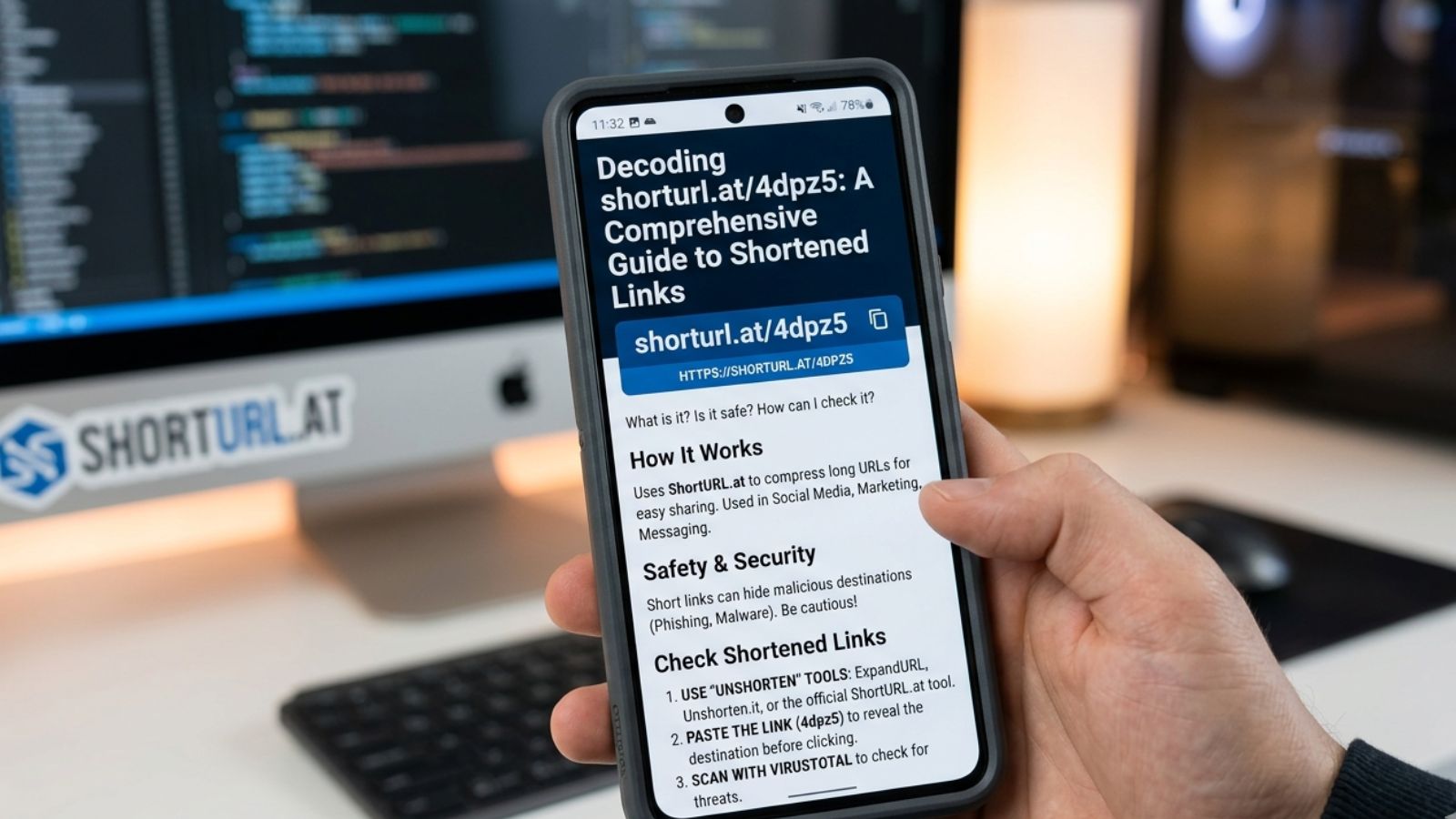
Shorturl.at/4dpz5 – In today’s digital world, sharing links is essential, but long URLs can be unwieldy. That’s where link shorteners come in. One link that has gained attention recently is shorturl.at/4dpz5. Many users ask: What is it? Is it safe? How can I check it?
This article provides a detailed guide on shorturl.at/4dpz5, explaining how it works, why it’s used, safety considerations, and tips for safely interacting with shortened links.
What Is Shorturl.at/4dpz5?
Shorturl.at/4dpz5 is a shortened URL created using the ShortURL.at service. Link shorteners take long web addresses and convert them into a compact, easy-to-share format.
Key points:
- It’s a redirect link: The short link points to another webpage. Clicking it automatically takes you to the original URL.
- The short link itself has no content: It’s merely a pointer.
- Destination unknown until expanded: You can’t tell where it leads without previewing it.
Why People Use Shortened URLs?
Ease of Sharing
Long URLs can be messy and hard to type. Short URLs make sharing cleaner, especially on social media, text messages, or emails.
Tracking Clicks
Some link shorteners allow users to track engagement. For example, businesses may monitor how many people click a campaign link.
Aesthetics
Short links look more professional and take less space, particularly in marketing materials.
Accessibility
A short URL is easier to remember than a long string of letters, numbers, and special characters.
How ShortURL.at Works?
The process is simple:
- User submits a long URL to the ShortURL.at platform.
- The service generates a short link, such as shorturl.at/4dpz5.
- When clicked, the short link redirects the user to the original webpage.
- This redirection usually happens instantly, making the experience seamless.
Safety Considerations for Short URLs
While link shorteners are widely used and legitimate, they can also be misused:
Potential Risks
- Redirecting to phishing sites
- Leading to malware downloads
- Masking spam or misleading content
Best Practices
- Preview the link using a URL expander before clicking
- Use trusted security tools like VirusTotal to scan links
- Avoid clicking links from unknown or suspicious sources
Trust the Source
Shortened links from reputable websites or verified accounts are generally safe. Links from unknown messages, emails, or comments should be treated with caution.
How to Check a Shortened URL Safely?
- Use Online Expander Tools
- Websites like CheckShortURL
- allow you to see the final destination without clicking.
Scan with Security Services
Paste the expanded URL into VirusTotal to check for malware or phishing alerts.
Look for HTTPS
Ensure the destination website uses a secure connection (https://) for safer browsing.
Manual Research
Search for the domain name separately to see if it is legitimate or flagged for scams.
Benefits of Understanding Shortened URLs
- Avoid Scams: Knowing how to check links protects you from phishing and malware.
- Enhance Productivity: Quickly identify safe links without trial and error.
- Professional Use: Marketers and businesses can leverage short URLs effectively for campaigns.
- Data Tracking: Learn how link shortening can provide valuable insights into user engagement.
FAQs About Shorturl.at/4dpz5
1. Is shorturl.at/4dpz5 safe to click?
It depends on the destination. Always preview or scan the link before clicking if the source is unknown.
2. Can anyone create a short URL?
Yes. ShortURL.at allows anyone to shorten a link, which is why safety depends on the creator.
3. How can I see where it leads without clicking?
Use a URL expander tool like CheckShortURL to reveal the destination.
4. Why do websites use shortened links instead of long ones?
Shortened links are easier to share, look cleaner, and allow tracking of engagement metrics.
5. Can shortened links contain malware?
Yes. Malicious actors can hide harmful links behind shortened URLs, so always verify before clicking.
Conclusion
shorturl.at/4dpz5 is a URL shortener link — a convenient way to share a longer URL. While the short link itself is neutral, its safety depends entirely on the destination webpage. By following best practices such as previewing links, scanning for malware, and trusting verified sources, you can safely use shortened URLs in emails, social media, or marketing campaigns.
Understanding how short URLs work not only protects you from potential threats but also allows you to use them effectively for business or personal purposes.
