



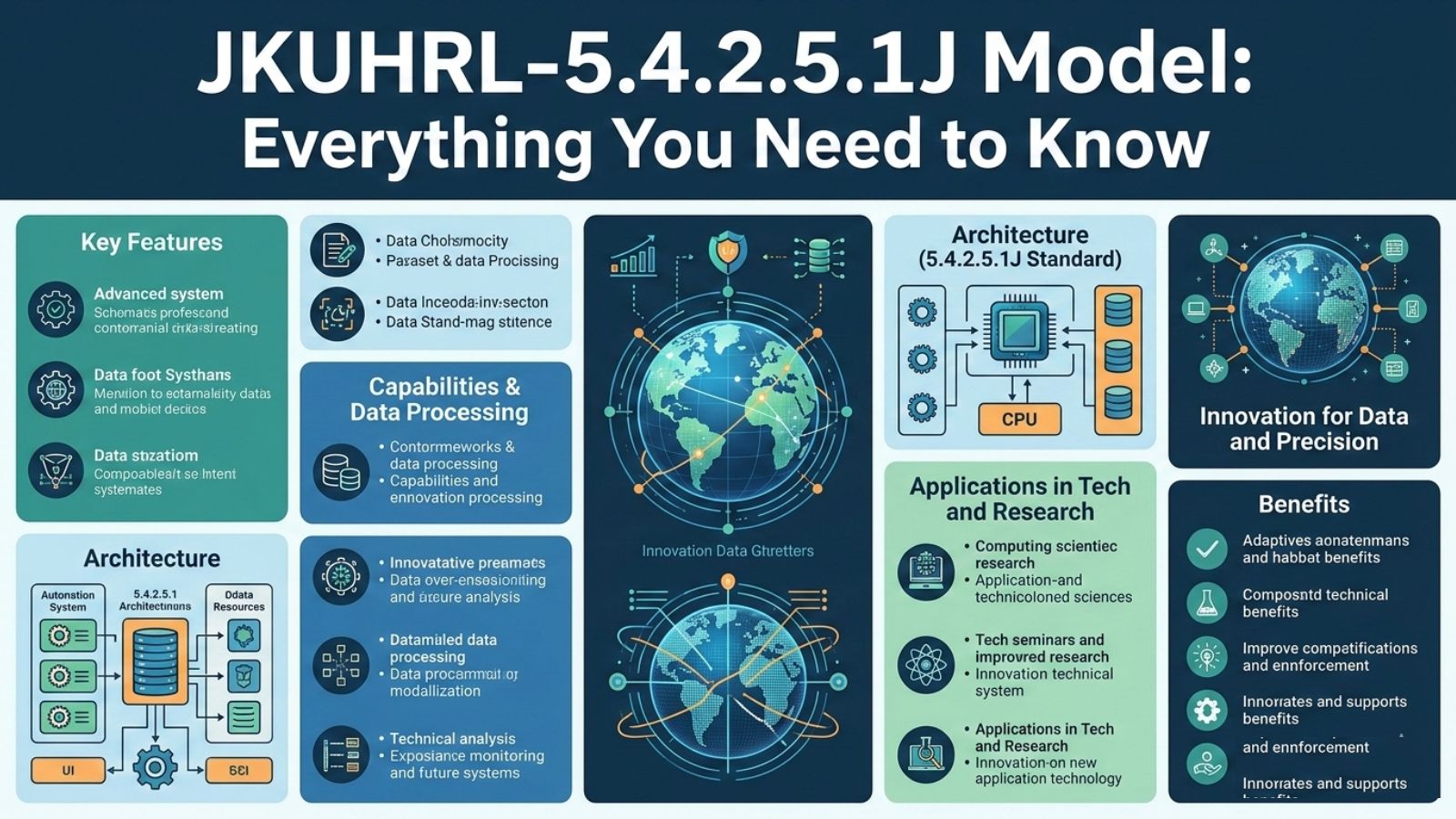
The JKUHRL-5.4.2.5.1J model is a huge improvement in industrial and tech systems. Being built for automotive, manufacturing, robotics, and automation, this model combines the best modern engineering and advanced algorithms to further enhance performance, efficiency, and reliability. In the fast-changing tech world, this model’s adaptability and focus make it a great choice for industries trying to gain a further edge.
In this document, you’ll find a comprehensive exploration of the JKUHRL-5.4.2.5.1J model and its characteristics, uses, advantages, and recommended ways to implement it.
Overview of the JKUHRL-5.4.2.5.1J Model
The JKUHRL-5.4.2.5.1J model is built to sophisticated specifications with the aim of improving operational efficiency across a wide array of industries. Most of it is built using the following principles:
- Highly advanced algorithms for real-time data collection and processing as well as real-time execution of these processes.
- Precise engineering used to further enhance reliability, efficiency, and performance.
- Adaptable for multiple domains like automotive, robotics, and manufacturing.
- Advanced automation which is designed to minimize human error and increase productivity.
The seamless combination of these principles allows the JKUHRL-5.4.2.5.1J model to process and execute several processes, which is a great fit for high demand production facilities.
With a solid and a wide range of fresh components that supply innovative functions, market sectors, and model range, here are some key components of the JKUHRL-5.4.2.5.1J model range:
Sophisticated Algorithmic Management.
It utilizes advanced management algorithms that are able to analyze operational data in real time, allowing the model to:
- Enhance the operational efficiency of its machines
- Forecast the operational workflow
- Decrease the overall operational workflow of the entire facility
- Decrease energy costs
- Improve efficiency of operational workflows.
These functions of algorithms and the JKUHRL-5.4.2.5.1J model variably guarantee the delivery of the best operational results, regardless of the prevailing conditions.
Data-based Precision Manufacturing.
Every component of the JKUHRL-5.4.2.5.1J model has been precisely engineered, manufactured, and maintained, guaranteeing that the model’s mechanical operational systems will have high levels of reliability, repeatable lifecycle operational systems, long lifecycle operational systems, remainder system integrated rest operational systems, and seamless integrated rest operational systems with the mechanical systems of other trades, automation, robotics, and advanced manufacturing combine systems, algorithms, and precisely manufactured components of the model, unsurpassed operational reliability, and beyond expectation operational reliability in seamless integrated rest operational systems.
Versatile Cross-Sector Use
One of the best features in the JKUHRL-5.4.2.5.1J model range is its differentiated, multiple cross-sector range. This model range has been designed to be incorporated in the following market sectors:
- Automotive: improvements in the efficiency and reliability of assembly operations, robotics, and integrated assembly operations.
- Manufacturing: improvements in efficiency, responsiveness, and throughput, as well as reductions in operational costs.
- Robotics: improvements in the precision, automation, and responsiveness of integrated robotics. Inter and intra operations as well as sensor-based operations.
- Automation: seamlessly integrated rest systems.
This integration of various features has been a major factor in ensuring that the entire JKUHRL-5.4.2.5.1J model range offers high-value operations and remains an excellent investment for all of its customer trade sectors The best features of cross-sector integration and automation have been integrated with the JKUHRL-5.4.2.5.1J model range to ensure fast operational response and seamless integration.
Monitoring and Reporting in Real Time
Features in the JKUHRL-5.4.2.5.1J model include real-time monitoring tools that offer the following insights:
- Machine performance
- Production
- Work stoppages
- Advanced alerts and maintenance
With real-time monitoring and predictive maintenance alerts, decision-makers can make faster, more informed decisions to minimize downtime and maximize productivity.
Saving Energy
With the JKUHRL-5.4.2.5.1J model, maintaining and enhancing operational output while minimizing energy consumption is essential because the model is designed to comply with sustainable energy and operational optimization. Intelligent-advanced algorithms provide ion of energy wastage.
Uses of the JKUHRL-5.4.2.5.1J Model
The unique design and construction of the JKUHRL-5.4.2.5.1J model allow the device to be used in many industrial applications, including but not limited to:
Automotive Sector
The JKUHRL-5.4.2.5.1J model in automotive manufacturing is utilized to:
- Automate assembly line
- Oversee robotic welding
- Guarantee assembly precision of components
- Minimize errors in production
Reliability and consistency is the hallmark of the JKUHRL-5.4.2.5.1J model.
Manufacturing and Industrial Automation
In manufacturing, the JKUHRL-5.4.2.5.1J model brings
- Advanced process automation and integrated workflows
- Quality control in real-time
- Advanced predictive maintenance
- Enhanced material handling.
In industrial applications, precision, and the tolerance to errors is minimal, the JKUHRL-5.4.2.5.1J model is considerably useful.
The Improvements in Robotics
Robotics engineering can use the JKUHRL-5.4.2.5.1J model because of its:
- Developed motion control
- AI-integrated robotic system
- Real time feedback
- Use with collaborative robots
All of these allow for automation to be more precise.
Research
The JKUHRL-5.4.2.5.1J model is used for R&D to:
- Test new business techniques
- Create reports of organized data
- Adjust design operational data
Adaptability is accumulated by R&D to solve issues in a variety of fields.
Advantages of the JKUHRL-5.4.2.5.1J Model
- Automation and precision engineering simplify the tasks overwhelming workers.
- This means that businesses can spend less and gain more.
Using the system means that productivity, reliability, and operational flexibility are all enhanced.
The JKUHRL-5.4.2.5.1J models allow businesses to increase their return.
Best Practices for Using the Model
To gain the most advantages of the system, companies need to consider these tips.
- Proper Repairing – Make sure that all the mechanisms have been adjusted to fit the requirements of the system.
- Predictive Maintenance Guides – To reduce downtime, follow the predictive maintenance guides as they explain how to troubleshoot maintenance issues.
- System Access Guides – Train employees on how the system works and how to troubleshoot any issues.
- Unified Integration Guide – Prepare to integrate with existing work systems and other work systems.
- Systems Optimization Guide – Use the analytics provided to improve system operations and track system usage in real time.
If you follow the guides, your system should work as efficiently as possible.
Planning for the Implementation
Due to JKUHRL-5.4.2.5.1J models’ advanced features, companies must think about:
- The investment and cost and the return on investment payoff.
- The amount of training required for operators.
- The need for software updates and updates to the firmware.
Prior to planning, these issues should be addressed to facilitate the implementation.
Looking Ahead
With the advancement of technology in the industrial sector, it can be expected that with the JKUHRL-5.4.2.5.1J model, you can access:
- Advanced analytics via AI and machine learning.
- Linked operations through the Internet of Things (IoT).
- Autonomous manufacturing systems via advanced robotics.
- Remote operational control with cloud monitoring.
The enhancements will increase the competition and adaptability of the system in the year 2026 and the years after.
Final Remarks:
The JKUHRL-5.4.2.5.1J model is to be one of the best industrial models as it is meant to achieve the best results in all areas. The advanced algorithms, engineering precision, and adaptability to all areas, including Vehicle, Manufacturing, Robotics, and Automation, make it special.When you use real-time monitoring, best practices, and good efficiency changes, you can keep your business ahead of the game while saving on expenses. The JKUHRL-5.4.2.5.1J model is a good business opportunity for those looking for future-oriented automation and advanced industrial systems.
FAQ’s About JKUHRL-5.4.2.5.1J Model
1. In what sectors is the JKUHRL-5.4.2.5.1J model being utilized?
It is mainly utilized in the automotive, manufacturing, robotics, and industrial automation fields.
2. In what way does the JKUHRL-5.4.2.5.1J model help in increasing efficiency?
It uses some of the best engineering and algorithms available for diminished errors, an increase in efficiency, and an overall decrease in workflow time.
3. Is there any additional training needed to use the JKUHRL-5.4.2.5.1J model?
Yes, training is necessary for the safe and effective operation of the system.
4. Is it possible to install JKUHRL-5.4.2.5.1J Model to other systems?
It is possible, but for that to happen, you will have to ensure that there is a plan for that.
5. How is upkeep of the JKUHRL-5.4.2.5.1J model done?
Before your system can face any significant downtime, you can inspect and monitor the components to help improve the system. This will need predictive maintenance, software updates, and other similar tasks.
